

Research & Development

Facialteam Research & Development

Our research and development team exists because we want to be the leading pioneers in FFS. Research is essential to improving procedures that create effective, natural, and long-lasting results for patients. We want to decrease recovery times and the invasivity of FFS procedures.

As pioneers, we focus on research and proclamations in the field of facial plastic surgery. So, our research and development team helps develop and train other professionals using leading technology.

Facial Feminization Researchers Dr. Fermín Capitán and Dr. Miguel Perceval, specialized facial feminization scientists at Facialteam, a clinic for FFS surgery.
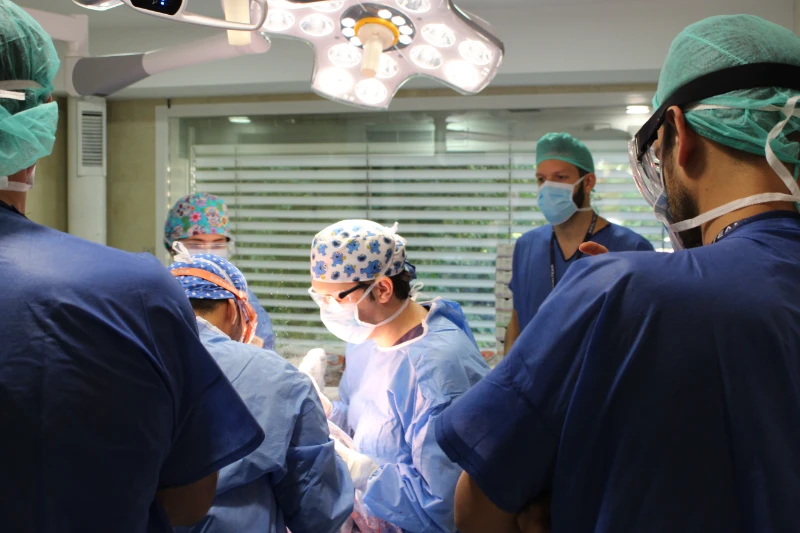
Facialteam surgeons and students of Facialteam Training and Education during a demonstration of Facial Feminization Surgery.

Leading Technology in Facial Feminization Surgery

Facial Feminization surgery is one of the fastest-growing specializations in the field of plastic surgery. Increasingly doctors and psychologists worldwide are recognizing the necessity of FFS for gender dysphoria.

With an increase in focus on FFS, we increase concentration to improve standards.

We use technology that reduces healing times and provides superior operational planning.
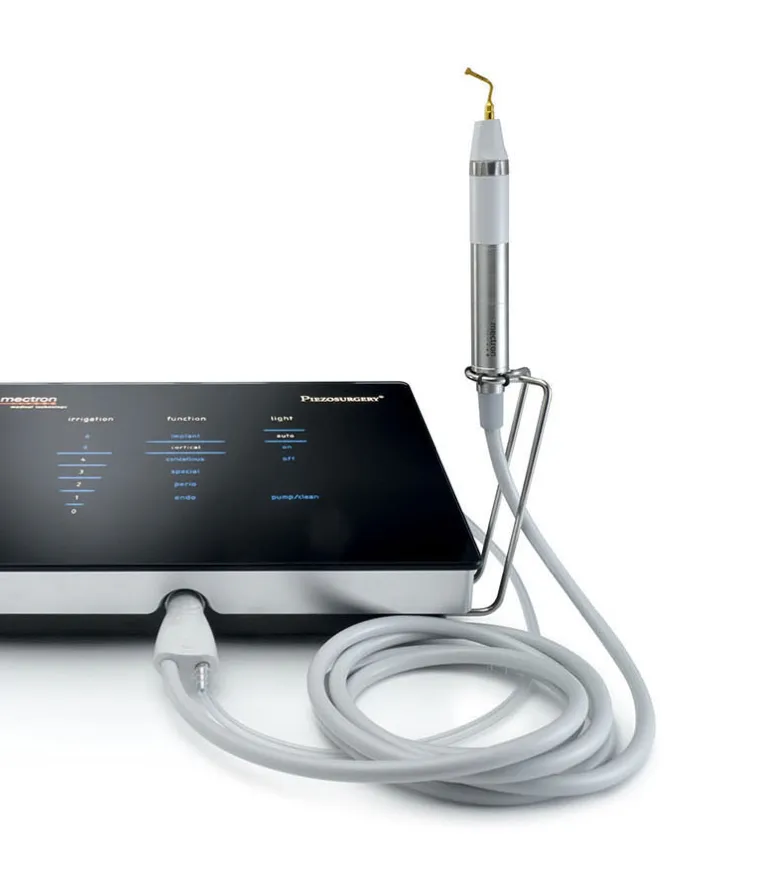
Mectron's Piezosurgery device, used to perform ultrasonic bone cuts in Facial Feminization Surgery

Piezosurgery by Mectron

Piezosurgery is a precision instrument that allows surgeons to perform procedures with maximum accuracy at minimal risk. The piezoelectric sensor emits ultrasonic energy waves to make this possible. 

Piezosurgery improves patient experience through: 

  • superior safety;
  • reduced recovery times;
  • predictable outcomes.

Since 2001, this technology has been the benchmark for bone surgery.
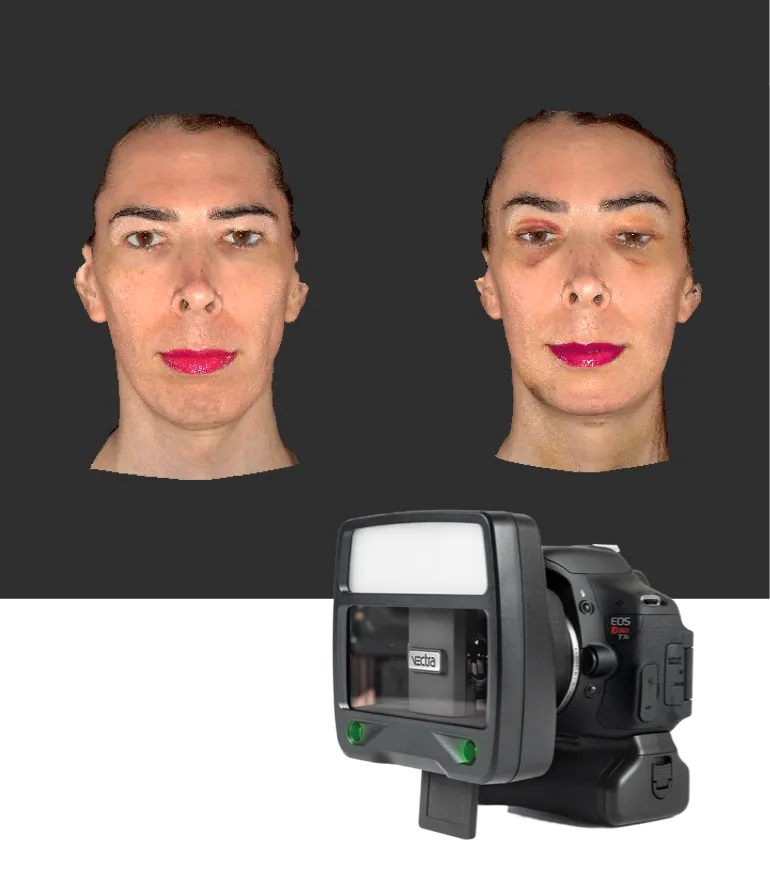
3D mapped facial structure before and after facial feminization surgery

Vectra H1 3D Imaging System

The Vectra H1 handheld imaging system brings clinical-quality 3D imaging to facial aesthetics. 

3D imaging provides us with unprecedented access to information previously unavailable. We can now view a full range of facial features from any angle in three dimensions in real-time.

Visualizing your facial structures is key for understanding how to design an optimal plan for your transitional journey.
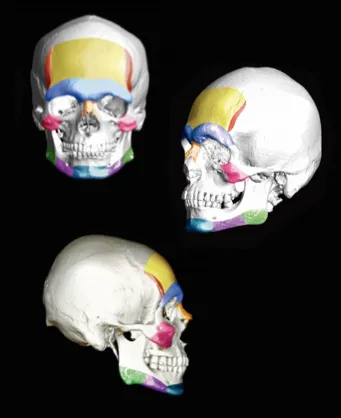
Skulls with highlighted areas where surgery can be performed to feminize masculine features of the face

3D CT-Scan

3D CT scans play a vital role in our daily practice. We use them to understand the facial structure of our patients within a millimeter of precision. 

Using this technology we document your transition and explain the changes made to your bone structure during your procedure. 

Our modern CT machine only takes 2-3 minutes to take all the scans we need. 

A part of the comprehensive care we provide 3D CT scans to all patients who will undergo a procedure with us. The scans enable us to have better communication and understanding with you throughout your transition process.

We highly recommend that you take advantage of 3D CT scans by attending an in-person consultation with us in Marbella. 

The CT scans provide valuable metrics about bone density and structure, and we cannot do this via virtual consultation. 
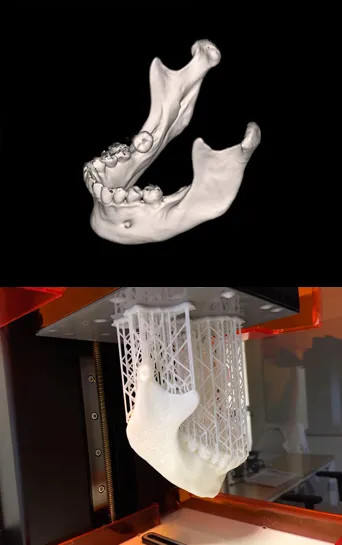
A 3d scan of a lower jaw and a replicated 3d model of the same bone structure

3D Printed Stereolithographic Models

We create a printed 3D model of your skull. The model helps us create your personalized FFS plan when needed. Having a model allows us to plan in more detail, provide the best overview of your unique facial features, and offer solutions to achieve your goals. 

The use of 3-D models in Oral and Maxillofacial Surgery significantly improves the predictability of clinical procedure outcomes. 

3D printed models reduce your stress and show real applicable results.

Scientific Publications

As one of the fastest-growing areas within plastic surgery, the dissemination of research in gender surgery is essential to improving patient outcomes and spurring on new innovations. To that end, we have published multiple scientific papers in peer-reviewed journals and medical books.

Every publication regards aspects of facial gender confirmation procedures. In English and Spanish, they include:

Cover of the British Journal of Oral and Maxillofacial Surgery with three image thumbnails and the Elsevier logo.

Facial Gender-Affirming Surgery: A State-of-the-Art Overview Based on 18 Years of Specialised Practice

Carlos Bailón, Raúl J. Bellinga, Miguel Ángel Juliá, Miguel Pérez de Perceval Tara, Ángel Penedo, Ildefonso Labrot, Fermín Capitán-Cañadas, Daniel Simon, Luis Capitán
Based on 3,582 patients treated between 2008 and 2025, this article reviews contemporary facial gender-affirming surgery (FGAS). Organised by facial and cervical regions, it explores anatomical planning, bone-driven feminisation, and advanced technologies that support predictable outcomes. It emphasises thorough preoperative assessment, realistic expectations, and ethical responsibility as foundations for safe, patient-centred care.
Cover of the Journal of Stomatology, Oral & Maxillofacial Surgery, with a pale line-drawn skull on the right and four green circular icons on the left; notes show Issue 55.

Telescopic Genioplasty: A novel technique for chin feminization in facial feminization surgery

Miguel Pérez de Perceval Tara, Carlos Bailón Berrio, Luis Capitán, Daniel Simon
This study explores telescopic genioplasty, alone or combined with chin feminization, in 22 transgender women treated during 2023. The technique reduces chin dimensions, adjusts its forward position, and creates a more tapered appearance. Using virtual surgical planning, 3D-printed cutting guides, and customized titanium miniplates, the authors report favorable aesthetic outcomes and low complication rates.
British Journal oral and maxilofacial surgery

Combined orthognathic surgery and jaw contouring to improve long face stigma: Lessons learned from facial feminisation

Simon D, Capitán L, Pérez de Perceval Tara M
Article on using 3D virtual planning and patient-specific guides for mandibular contouring and osteotomies to reduce facial height and achieve harmonic results.
Logo showing 'Facial Plastic Surgery & Aesthetic Medicine' with red F and A initials used for branding.

Simultaneous Chondrolaryngoplasty and Platysmaplasty in Male-to-Female Facial Gender-Affirming Surgery: A Surgical Technique

Raúl Jiménez Bellinga, Carlos Bailón Berrio, Miguel Pérez de Perceval Tara, Luis Capitán Cañadas.
The technique achieves simultaneous cervical feminization and aesthetic improvement without additional morbidity to the neck region.

Development and Assessment of a Patient-Reported Outcome Instrument for Gender-Affirming Care

Manraj N. Kaur, PhD1; Charlene Rae, PhD2; Shane D. Morrison, MD, MS3 et al. Capitán-Cañadas F, Simon D, Capitán L.
This international cross-sectional study was conducted among TGD adults aged 18 years and older who were seeking or had received gender-affirming care within the past 5 years at 21 clinical sites across Canada, the United States, the Netherlands, and Spain; participants were also recruited through community groups (eg, crowdsourcing platform, social media). The study was conducted between February 2022 and March 2024. Participants had to be capable of completing the instrument in English, Danish, Dutch, or French-Canadian. Eligible participants accessed an online REDCap survey to complete sociodemographic questions and questions about gender-affirming care they had received or sought (ie, to look, function, or feel masculine, feminine, gender fluid, or another way).
Cover of Le Front magazine with a blue left border, a central purple poster-style image featuring white text and circular design, and a contents list on the right side; the magazine title Le Front is prominently displayed.

Advanced Surgical Techniques in Forehead Feminization and Hairline Redefinition
L Labrot-Moreno, L Capitán, D Simon, F Capitán-Cañadas
This article reviews forehead feminization and hairline redefinition techniques within Facial Gender-Affirming Surgery (FGAS). Drawing on over 2,300 forehead feminization surgeries performed across 16 years, it describes approaches to modifying facial features in line with patients’ gender identity and goals. It provides practical insights for surgeons and other professionals involved in gender-affirming care.
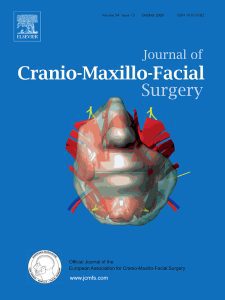
Cover of the Journal of Cranio-Maxillofacial Surgery on a blue background featuring a 3D skull/head model and the journal title.

Soft-tissue complications after facial feminization bone surgery

Luis Capitán, Daniel Simon, Devin Coon, Raúl J Bellinga, Carlos Bailón, Miguel Pérez de Perceval Tara, Thiago Tenório, Fermín Capitán-Cañadas
Identify soft-tissue complications and suboptimal outcomes that can occur after facial feminization bone surgery (forehead reconstruction, lower-jaw surgery, and thyroid chondroplasty), along with prevention strategies and treatment alternatives.
Facial Plastic Surgery & Aesthetic Medicine Journal Logo

Shaping the Lower Jaw Border with Customized Cutting Guides: Development, Validation, and Application in FGAS

Gutiérrez-Santamaría J, Simon D, Capitán L, Bailón C, Bellinga RJ, Tenório T, Sánchez-García A, Capitán-Cañadas F
Three-dimensional planning software is not standardized in facial gender-affirming surgery. This article develops and validates surgical planning software to create cutting guides to contour the lower jaw border.
Logo of SECOM CyC (Sociedad Española de Cirugía Oral y Maxilofacial) featuring a yellow circle and blue curved arrow.

Rinoplastia abierta estructurada en cirugía de feminización facial. Lecciones aprendidas tras 1422 casos consecutivos

Raúl Jiménez Bellinga, Miguel Ángel Juliá, Ángel Penedo, Miguel Pérez de Perceval, Daniel Simón, Luis Capitán
Este estudio retrospectivo describe una técnica de rinoplastia abierta feminizante y sus resultados en 1.422 pacientes intervenidos entre 2013 y 2023. Combina instrumental piezoeléctrico, plasma rico en fibrina y planificación 3D con guías de corte personalizadas. Con un seguimiento de entre 2 y 109 meses, no hubo reintervenciones de urgencia y la tasa de revisión fue del 3,14 %. Los autores concluyen que estas herramientas y las técnicas de estructuración mejoran la predictibilidad y estabilidad de los resultados, manteniendo o mejorando la función nasal.
Book cover: Volume Three, Plastic Surgery, edited by Peter C. Neligan; colorful illustration of surgeons’ heads; subtitle craniofacial, head and neck surgery and plastic surgery; editors Losee and Hopper.

Facial Feminization – Hopper RA, ed. Plastic Surgery, 5th ed. Philadelphia, USA: Elsevier

Capitán L, Penedo Á.
Includes evidence-based guidance, new treatment algorithms, and editor-narrated video presentations providing a step-by-step walkthrough of craniofacial techniques.
Logo of PRS, Plastic and Reconstructive Surgery.

Secondary Facial Gender Surgery: Causes of Poor Outcomes and Strategies for Avoidance and Correction

Simon D, Capitán L, Coon D, Gutiérrez-Santamaría J, Bailón C, Bellinga RJ, Pérez de Perceval Tara M, Tenório T, Capitán-Cañadas F
This Special Topic categorizes unsatisfactory outcomes encountered after forehead surgery, lower jaw surgery, and thyroid chondroplasty, key steps to avoid these pitfalls, and strategies for structured analysis and operative planning in revision cases.
Logo of Elsevier, a leader in information and analytics for customers across the global research and health ecosystems

Atlas of Operative Techniques in Gender Affirmation Surgery
Luis Capitán, Daniel Simon, Fermín Capitán-Cañadas
As transgender and gender non-binary individuals are a growing demographic, the number of patients seeking gender confirmation surgery is increasing. Atlas of Operative Techniques in Gender Affirmation Surgery is a highly illustrated and practical guide to the different types of gender affirmation surgery.
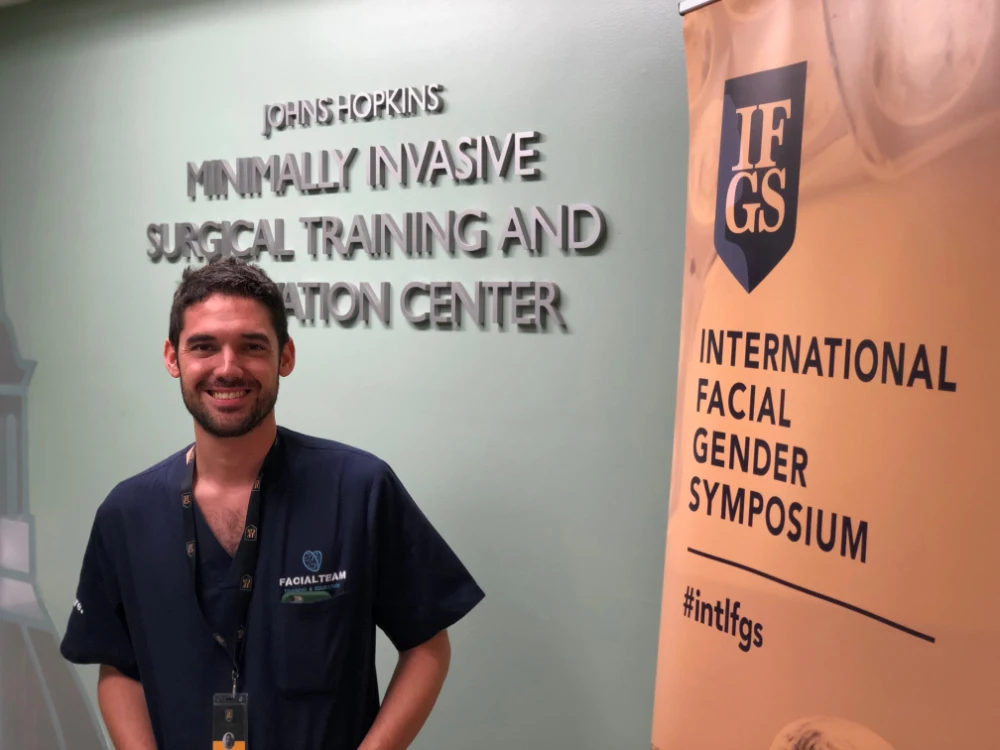
Facialteam FFS scientist dr. Fermín Capitán during the international facial gender symposium at johns hopkins training center

Research Partnerships

The surgeons at Facialteam strongly emphasize research and collaborate on projects with large academic institutions and private companies. We do this to provide you with the best standards in transgender healthcare. 

We are constantly researching the latest technology and advances in FFS. We work with several research institutions to contribute to improving transgender healthcare standards. They include: