


Virtual FFS
Virtual FFS stands for “virtual facial feminization surgery,” or VFFS, a term coined by gender analyst, Alexandra Hamer, founder of VirtualFFS.co.uk
Facialteam first started collaborating with Alexandra in 2011 and generated thousands of simulations helping patients to understand the obtainable results with facial feminization surgery.
By now, our Virtual FFS team consists of 3 specialists generating +50 digital FFS simulations per month.
What is Virtual FFS?
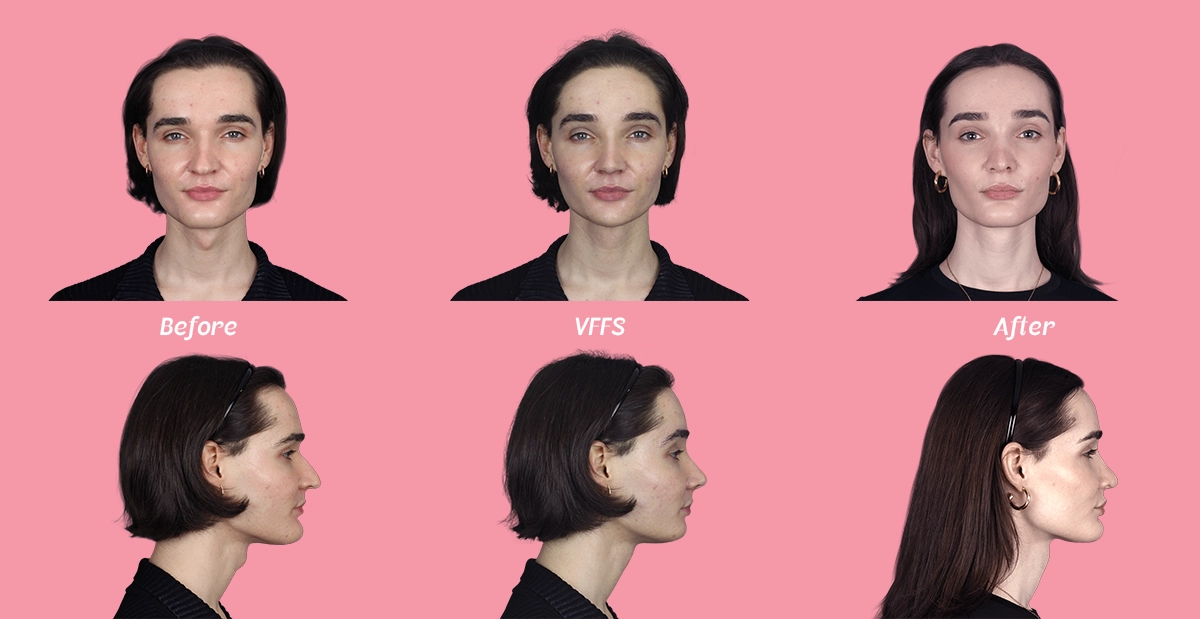
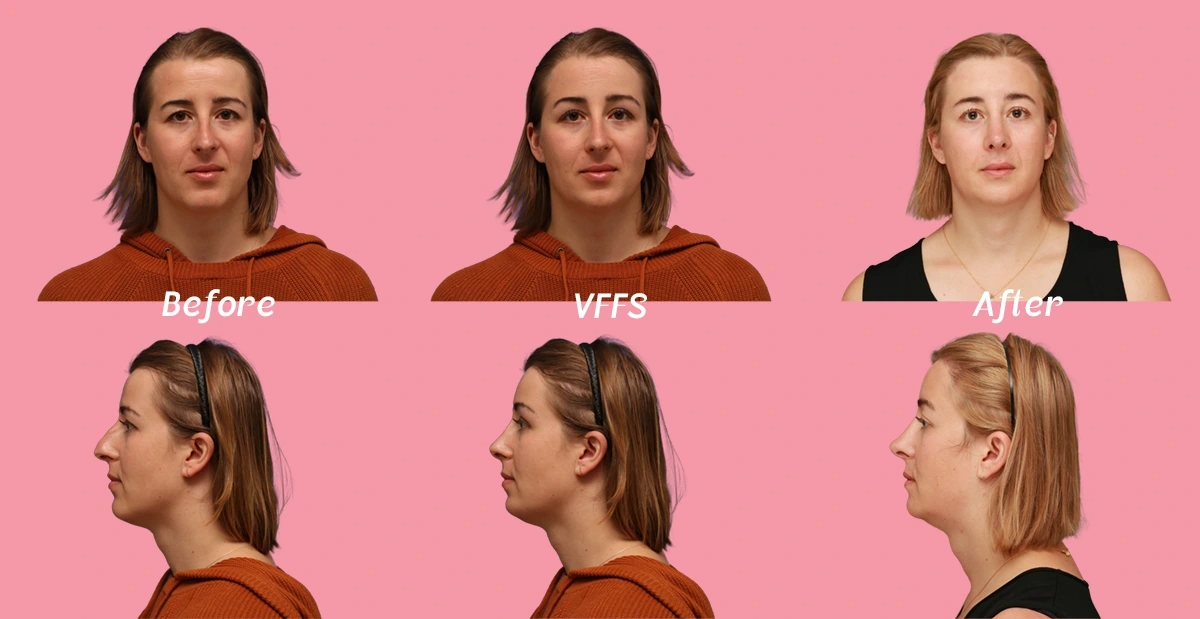
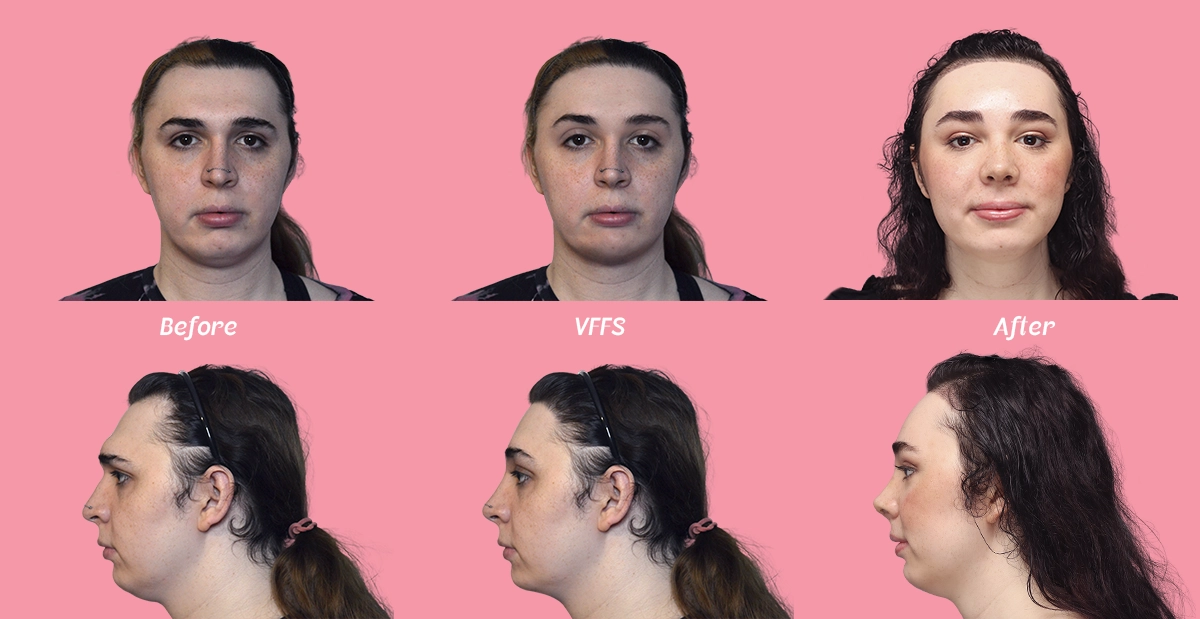
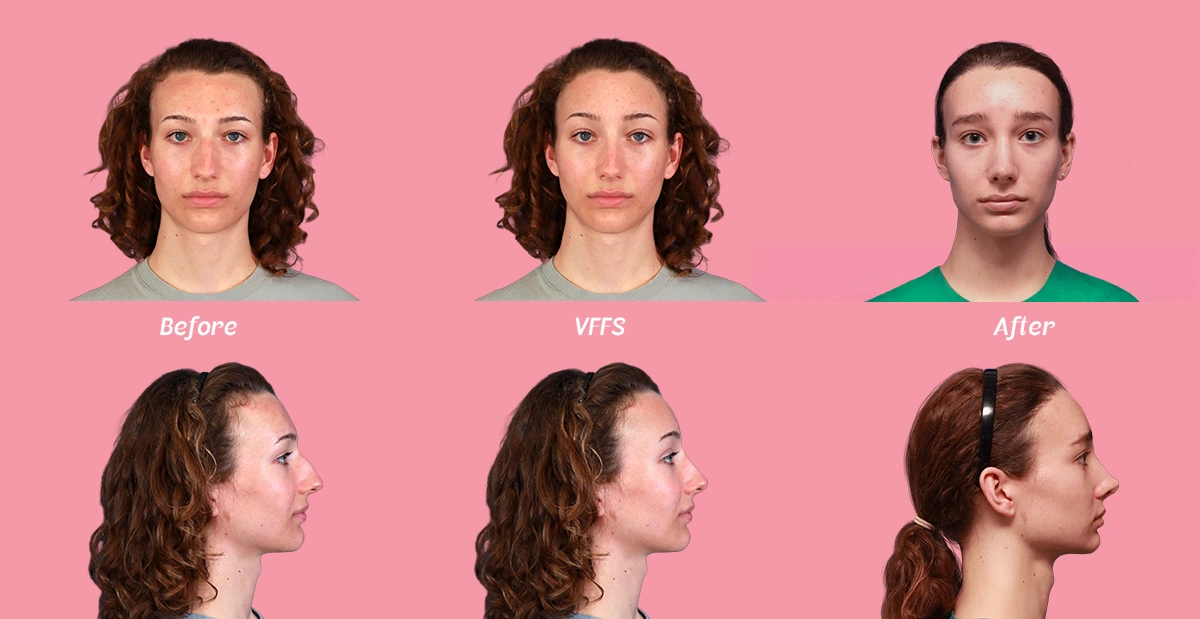
Virtual Facial Feminization Surgery (VFFS) is a high-definition, 2D photographic simulation that provides a visual approximation of your potential appearance after undergoing specific surgical procedures.
Using clinical-grade photographs and advanced digital image editing software, our skilled artists create realistic predictions from multiple angles to help you visualize the possibilities.
While these digitally enhanced, two-dimensional images are a valuable tool for setting expectations, it’s important to note their limitations.
The simulations aim to illustrate approximate outcomes, but actual FFS results may vary based on individual anatomy and surgical factors.
Each simulation is crafted manually by a dedicated virtual FFS expert artist with a deep understanding of facial anatomy and feminization techniques.
This personalized approach ensures that every detail is thoughtfully considered, providing you with an accurate and tailored visualization based on your unique features and goals.
What Would I Look Like with FFS?
A common concern among our patients and some of their partners is the fear that facial feminization surgery (FFS) will make you look unrecognizable.
While your post-operative appearance depends on various factors, the goal of facial gender surgery is to restore the natural contours of your skull to resemble its pre-puberty shape as closely as possible.
Rather than erasing your family resemblance, FFS enhances your features to create a more feminine version of yourself. But how can you envision these changes?
Before adolescence, human skulls are quite similar, with gender-specific traits developing later due to hormonal changes during puberty.
Since everyone’s anatomy and goals are unique, Virtual FFS allows us to pre-visualize the potential impact of each procedure, giving you a clearer understanding of how FFS can help you achieve your goals.
Virtual FFS Examples
Benefits of a Virtual FFS
Virtual FFS allows you theoretically to compare the impact of a single or set of attributes. It will also be an interesting record for a baseline assessment of your results after surgery.
The before and after projections are one tool in assessing which techniques are the most and least effective at minimizing masculine traits.
In addition, the Virtual FFS is a visual aid in establishing attainable objectives and realistic expectations of results.
Virtual FFS helps you be a better informed advocate on your transition journey. It addresses some finer aspects of researching facial gender affirming surgery:
- Encourages you to communicate your objectives clearly, with graphic support and discuss if they are realistic with our surgeons.
- Helps you analyze the pros and cons of your desired level of subtle or dramatic change for more viable expectations, procedure by procedure.
- Permits you, partners and family to contemplate the positive potential FFS can have, not only on your look, but also your confidence.
Virtual FFS at Facialteam

At Facialteam, our in-person consultations in Marbella and Barcelona include a detailed analysis of your potential results through virtual simulations of your Before and After facial feminization surgery.
This personalized approach allows you to visualize how FFS could enhance your features, providing clarity and confidence as you plan your surgical journey.
Currently, Virtual FFS is officially offered exclusively during in-office consultations.
This is because creating accurate simulations requires high-quality images captured under controlled conditions with precise lighting and angles. These technical requirements ensure the simulations are as realistic and reliable as possible.
We understand the importance of visualizing your potential outcomes, and our VFFS team is dedicated to delivering an exceptional and informative experience during your consultation.
Book Your Consultation with Virtual FFS
Do you want to get your Virtual FFS and speak with a Facialteam surgeon afterwards in order to have your questions about FFS answered?
Choosing the right FFS surgeons for you may be one of the challenges of a medical transition, but it’s not an obligatory part. Our team of experts offers free consultations to help you put things in perspective.
A visit to Marbella or Barcelona for a consultation is an example of the effortless experience Facialteam creates for all patients.
Why have Virtual FFS?
Making well-informed decisions about your facial feminization journey is essential, especially when transition-related surgeries represent a significant investment.
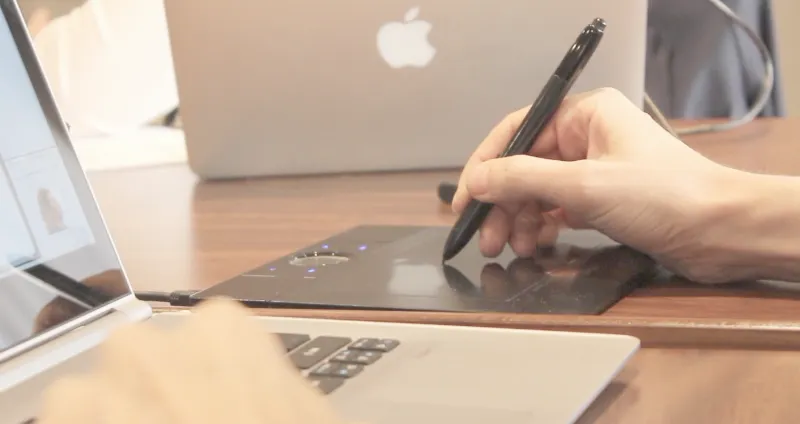
That’s why our Virtual FFS service provides objective, personalized feedback with photographic simulations—helping you visualize potential surgical outcomes. Here’s why Virtual FFS matters:
- Confidence in Your Choices: Make decisions with greater peace of mind, backed by expert visual insights.
- Clarity in Decision-Making: Understand what specific procedures can realistically achieve for your facial goals.
- Personalized Approach: Get a tailored simulation based on your unique facial structure and surgical recommendations.
How Does Virtual FFS Work?
- Photo Session: A coordinator captures a series of clinical images in our professional photo studio.
- Virtual FFS Creation: Using these images, a highly trained and experienced digital artist manually develops a personalized Virtual FFS simulation.
- Consultation Discussion: In most cases, you’ll discuss the simulation with your surgeon during the consultation. If this isn’t possible, the virtual images will be sent to you via email.
The goal is simple: to provide valuable, tailored insights that help you feel confident and informed as you plan your FFS journey.
Why Facial Feminization AI Filters Fall Short Compared to a Virtual FFS Artist
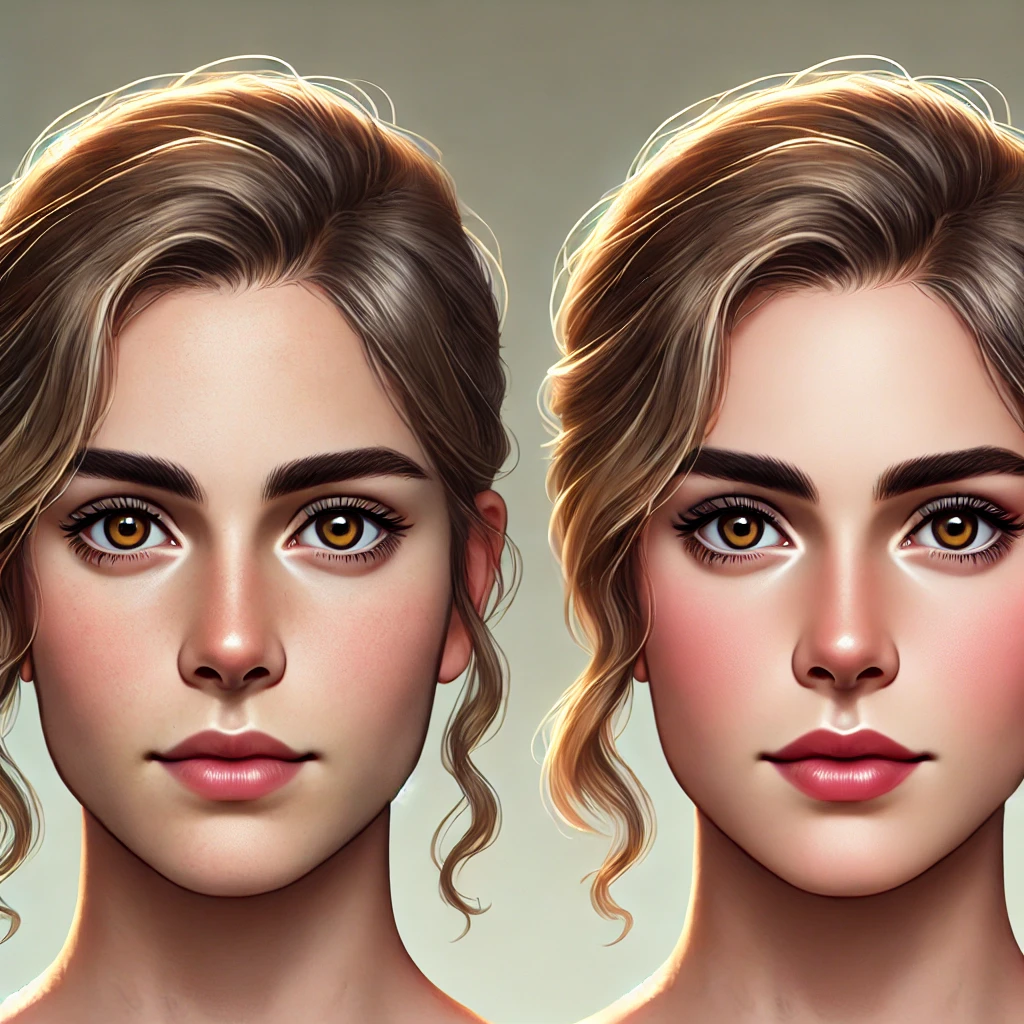
As AI technology and facial filters continue to evolve, many people are drawn to using facial feminization AI filters to visualize potential surgical outcomes.
While these tools provide a quick and convenient glimpse of transformation, they fall short when it comes to delivering accurate and achievable predictions. AI filters often apply generic changes that overlook the complexities of individual facial anatomy and the realistic possibilities of surgery.
At Facialteam, we believe in the unmatched value of working with a Virtual FFS Artist — a skilled professional who collaborates directly with our surgeons to craft thoughtful, personalized simulations.
By combining artistry with surgical expertise, they provide a realistic vision tailored specifically to your unique facial features and surgical goals.
Why Choose a Virtual FFS Artist Over AI Filters?
Unlike generic AI algorithms, Virtual FFS Artists consider your unique facial structure, surgical possibilities, and personal goals to provide tailored predictions grounded in real-world expertise. Therefore:
- AI filters often apply unrealistic or overly generic transformations that don’t reflect surgical possibilities.
- Virtual FFS Artists work closely with FFS surgeons to ensure simulations are both beautiful and realistic.
- Personalized insights from an FFS expert help guide your journey with confidence and clarity.
AI tools may be convenient, but nothing compares to the artistry and expertise of a professional dedicated to helping you envision a realistic outcome for your facial feminization journey.